Chloride in crude oil exists in two forms: inorganic chlorides, dissolved in water and largely removed during desalting, and organic chlorides, which do not occur naturally in crude and usually come from contamination, for example by chemicals used in production.
Why it is a risk
During refining, organic chlorides break down and form hydrochloric acid. This acid causes rapid corrosion of overhead systems and heat exchangers, leading to unplanned shutdowns and high maintenance costs. That is why many contracts and refineries set a maximum organic chloride limit for delivered crude.
The ASTM D4929 method
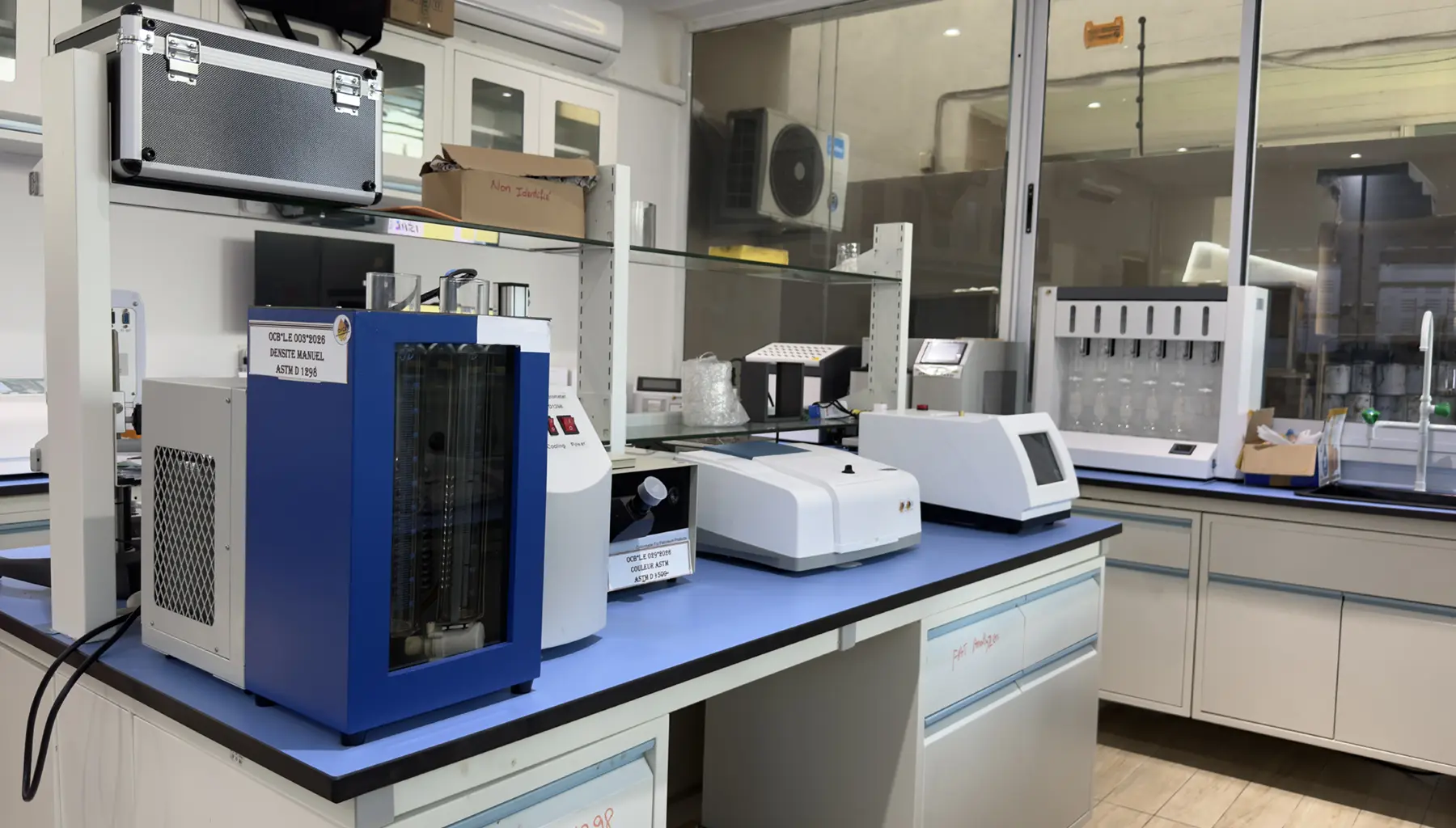
The standard calls for distilling the sample to isolate the naphtha fraction, where organic chlorides concentrate. This fraction is then washed to remove inorganic chlorides before being analysed. Our laboratory uses a microcoulometric titrator, which measures chloride at mg/kg levels with high precision.
A test to build into your operations
For buyers and sellers alike, this test makes it possible to verify crude compliance before delivery, prevent commercial disputes and protect refining facilities.
Contact us to add organic chloride testing to your inspection programme.